Project Overview
Role
Lead UX/Workplace Designer at Lech Büroplanung GmbH
Impact
84% employee satisfaction,
27% increase in cross-team collaboration
41% growth in spontaneous interactions
Methods
Survey research, Leadership interviews, Co-creation workshops, Journey mapping, Low-fi prototyping
Tools
Miro, Microsoft Forms, Figma (spatial wireframes), AutoCAD
Duration
12 months
Team
Workplace consultant, Change Managers, Facility Manager, HR Head
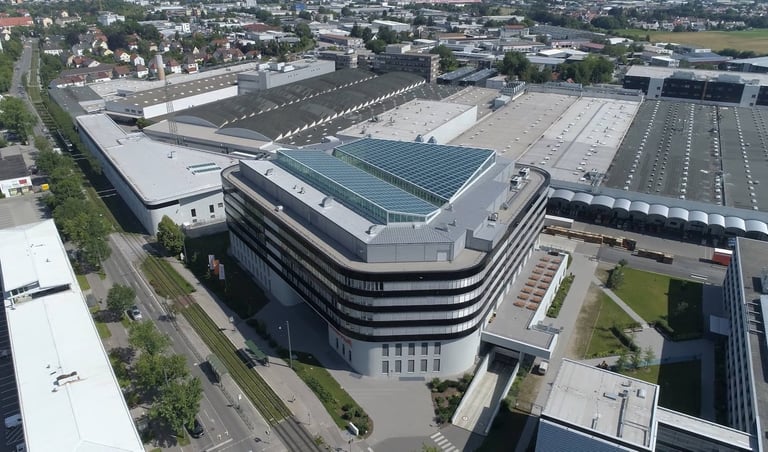
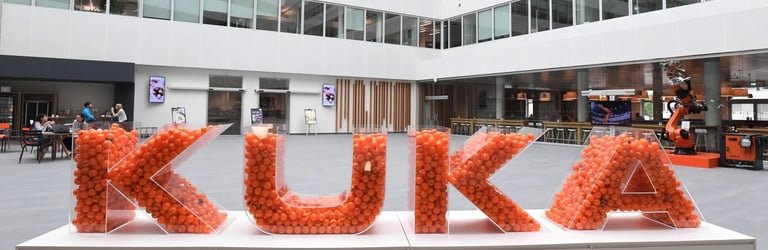
KUKA Robotics in Augsburg faced a critical issue post-pandemic: their 35 departments were scattered across multiple buildings with inconsistent workspace standards. Only 42% of employees regularly worked from the office, and internal surveys showed declining collaboration scores.
Leadership asked: How might we redesign our workspace to make coming to the office irresistible?
The R&D team needed at least 3+ hour focus block.
Co-Creation: Making Employees Co-Designers
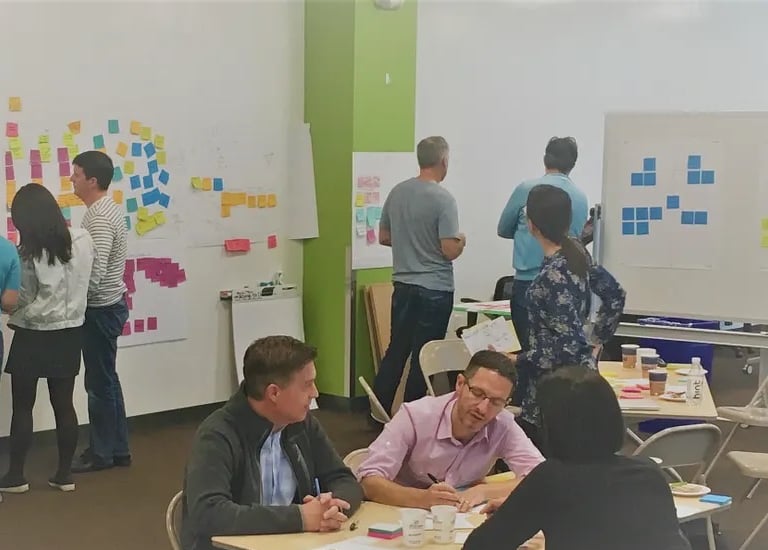
Rather than redesigning in isolation, our team initiated a two-step co-creation workshop series with selected pilot departments—about 8–10 representatives per group.
Activity 1: A Day in Your Life
Workshop 1: Uncovering Microteam Dynamics
(10 employee representatives)
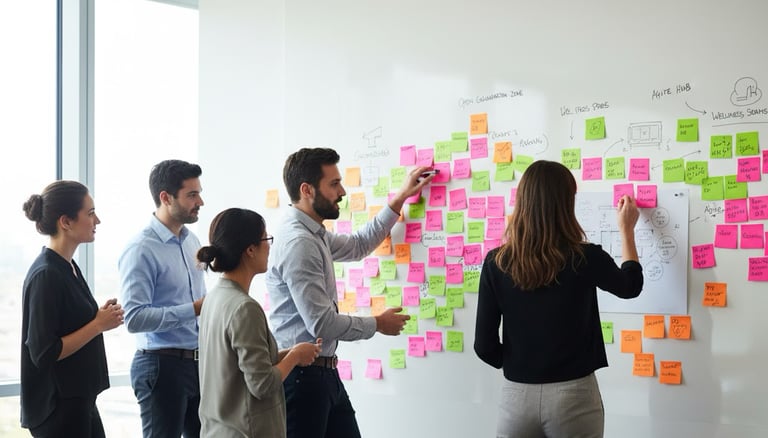
top three 3 activities from the workshop that gave insights into work patterns, disconnections, spatial journey
Activity 2: Keep, Change, Add
Activity 3: Space Journey Mapping
Keep: Height-adjustable desks (mentioned by 9/10 participants)
Change: “War room” that sat empty 80% of time while teams scrambled for ad-hoc space
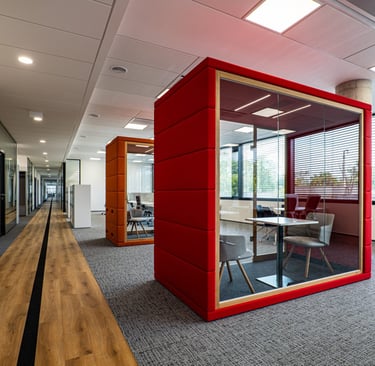
Add: “Concentration pods” for focused work between meetings
We created a physical map showing how teams moved through their day.
1. Microteam neighborhoods (4-8 people) clustered by collaboration frequency
2. Flexible “team spaces” replacing assigned conference rooms
3. Concentration zones between 09:00-15:00 (peak focus hours)
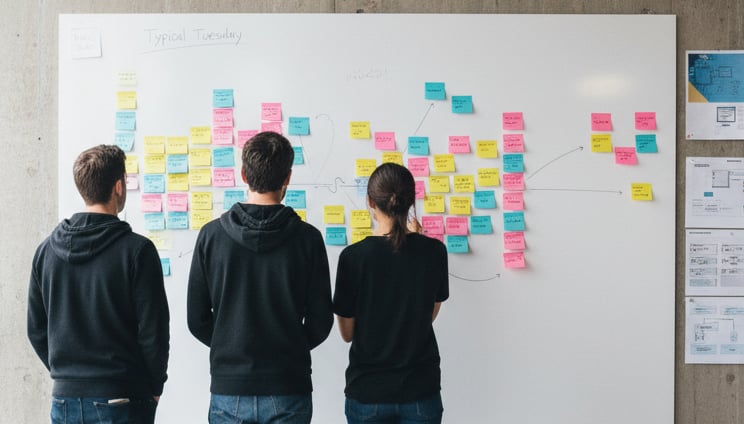
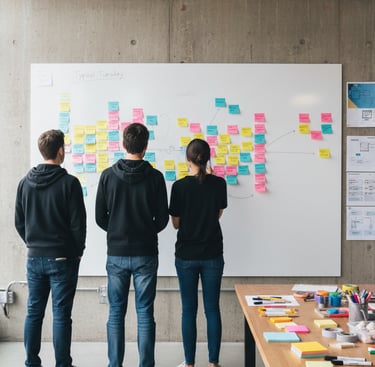
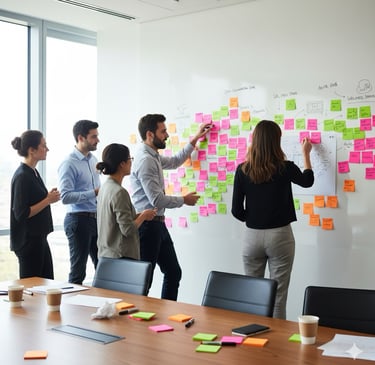
Participants mapped their typical Tuesday with sticky notes – meetings, focus work, collaboration moments. Pattern emerged: 40% of their day involved waiting for others or searching for available meeting spaces.
Workshop 2: Refining Reality (2 weeks later)
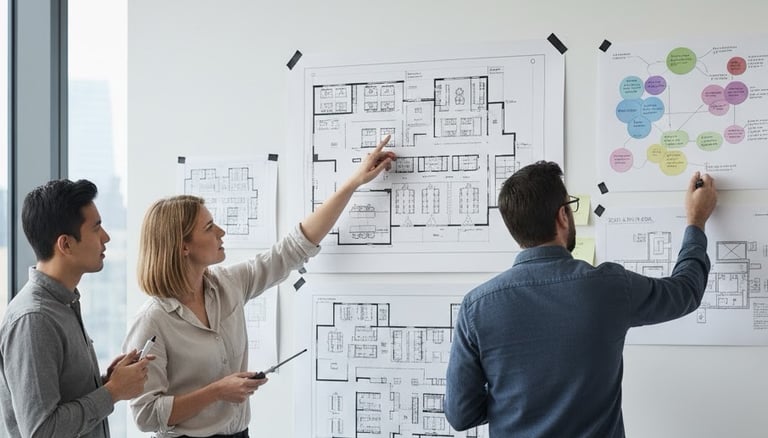
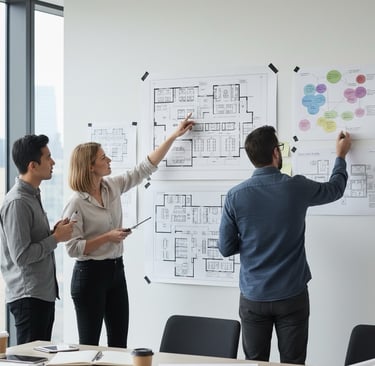
I presented lo-fi floor plan prototypes based on Workshop 1 insights. Using 1:50 scale furniture cutouts, participants physically rearranged spaces.
Critical moment: The department head wanted private offices restored. But when I showed data – 73% preferred open neighborhoods with optional quiet rooms – he saw employees prioritize team connection over status symbols.
Final prototype included:
6 microteam neighborhoods (12-15 people each)
3 concentration pods (bookable 2-hour slots)
1 “project garage” – reconfigurable space for sprint work
Shared collaboration zones every 15 meters
Acceptance vote: 93% approval from department representatives

The pilot space once launched was tracked for success metrics for 3 months:
Prototype to Performance: The Pilot Results
Quantitative Impact
Qualitative Feedback