Wohnly - Tackling Munich’s Student Accommodation Crisis
Empowering students to find verified, affordable housing in Munich—slashing search time by over 60% and eliminating scams
Project Overview
Role
UX / UI Researcher & Designer
Methods
Desk research, quantitative and qualitative research, Wireframing, Prototyping
Tools
Miro, Typeform, Figma
Duration
4 weeks (part of UX course)

Understanding the landscape
The context
Munich’s student housing crisis isn’t just about numbers—it’s about stress, scams, and survival. As a student who spent countless hours refreshing multiple platforms, attending fake apartment viewings, and watching better-paid working professionals takeaway apartments, I experienced firsthand the nightmare of finding a home in Germany’s most expensive university city



Rising costs outpacing student budgets
1
2
Core Problem Identification
Scam epidemic targeting desperate students
3
Competition from working professionals
To understand the depth of student housing challenges, I conducted mixed-method research combining quantitative breadth with qualitative depth :
Phase 1: key insights of anonymous survey of 47 students respondents (23 international + 24 national)
Research that revealed Hidden Emotions
Phase 2: critical emotional insights from semi-structured Interviews of 4 students with diverse backgrounds
74%
found themselves competing or loosing to working professional ready to pay higher rents
12+ hrs
average time spent weekly searching for housing across 4-6 different platforms simultaneously, impacting their studies and mental health
39%
42%
reported encountering scam listings, with 12% lost money to fraudulent landlords due to desperation
students all together thus find the entire house search process stressful

Anxiety and constant vigilance: “I set alarms every 2 hours to check if new listings appeared. I couldn’t focus on my thesis. It felt like a second full-time job.” — Julia


Loss of trust and safety: “After the scam, I questioned every listing. The landlord sent professional-looking contracts, keys were supposed to come after payment. I lost €900 and my confidence.” — Nicol
Feeling systemically disadvantaged: “Landlords see ‘student’ and immediately prefer working professionals. We’re seen as risky even though we just want to study. It’s demoralizing.” — Albert
Affinity Mapping: Synthesizing the Data
After collecting 47 survey responses and 4 in-depth interviews, I conducted affinity mapping to identify patterns and prioritize pain points.
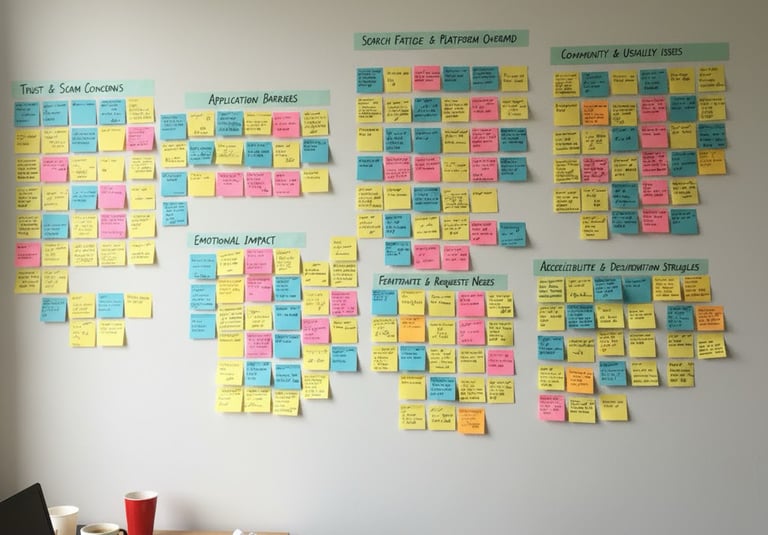
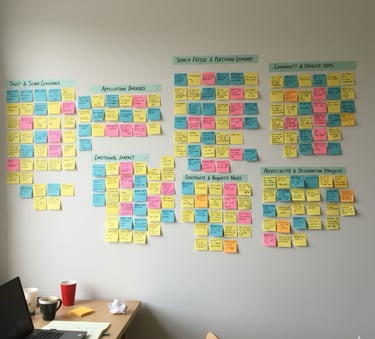
Theme 1: Trust & Verification Gap
Clusters included: “Can’t tell real from fake,” “No way to verify landlords,” “Fear of losing money,” “Need proof listings are real,” “Want student-specific verification”
Theme 2: Information Overload & Time Pressure
Clusters included: “Checking 5+ platforms daily,” “Missing opportunities overnight,” “Can’t prioritize listings,” “Overwhelmed by options,” “Need centralized search”
Theme 3: Student-Specific Disadvantage
Clusters included: “Losing to working professionals,” “Can’t compete on price,” “Need student-friendly landlords,” “Want community support,” “Seeking peer recommendations”
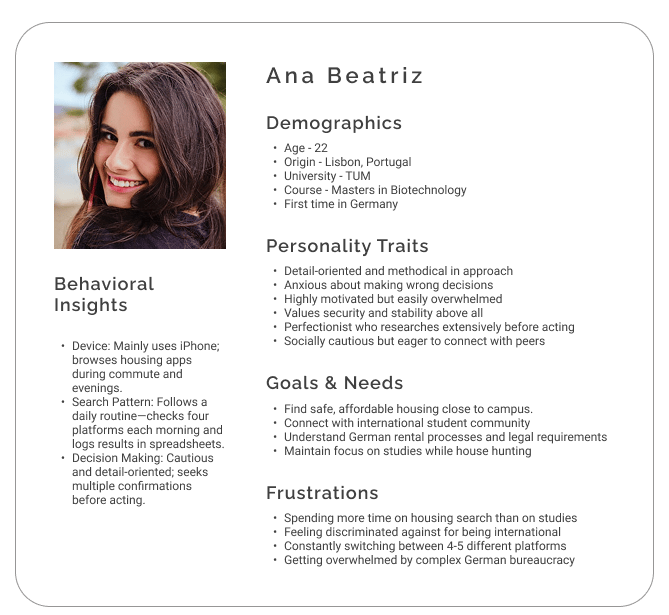
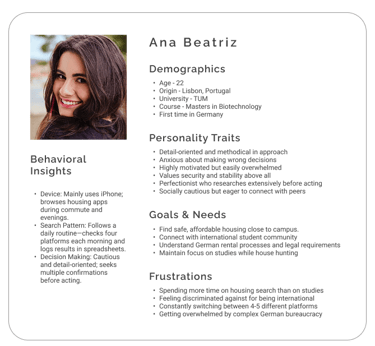
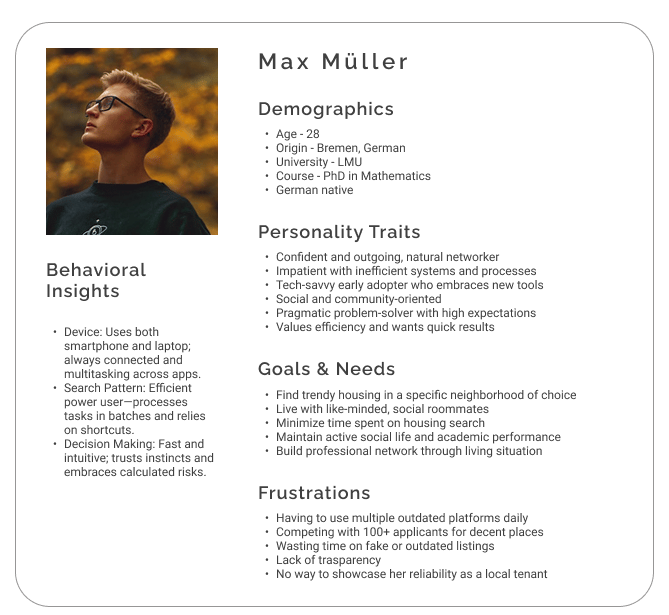
Persona Building: Understanding Our Users
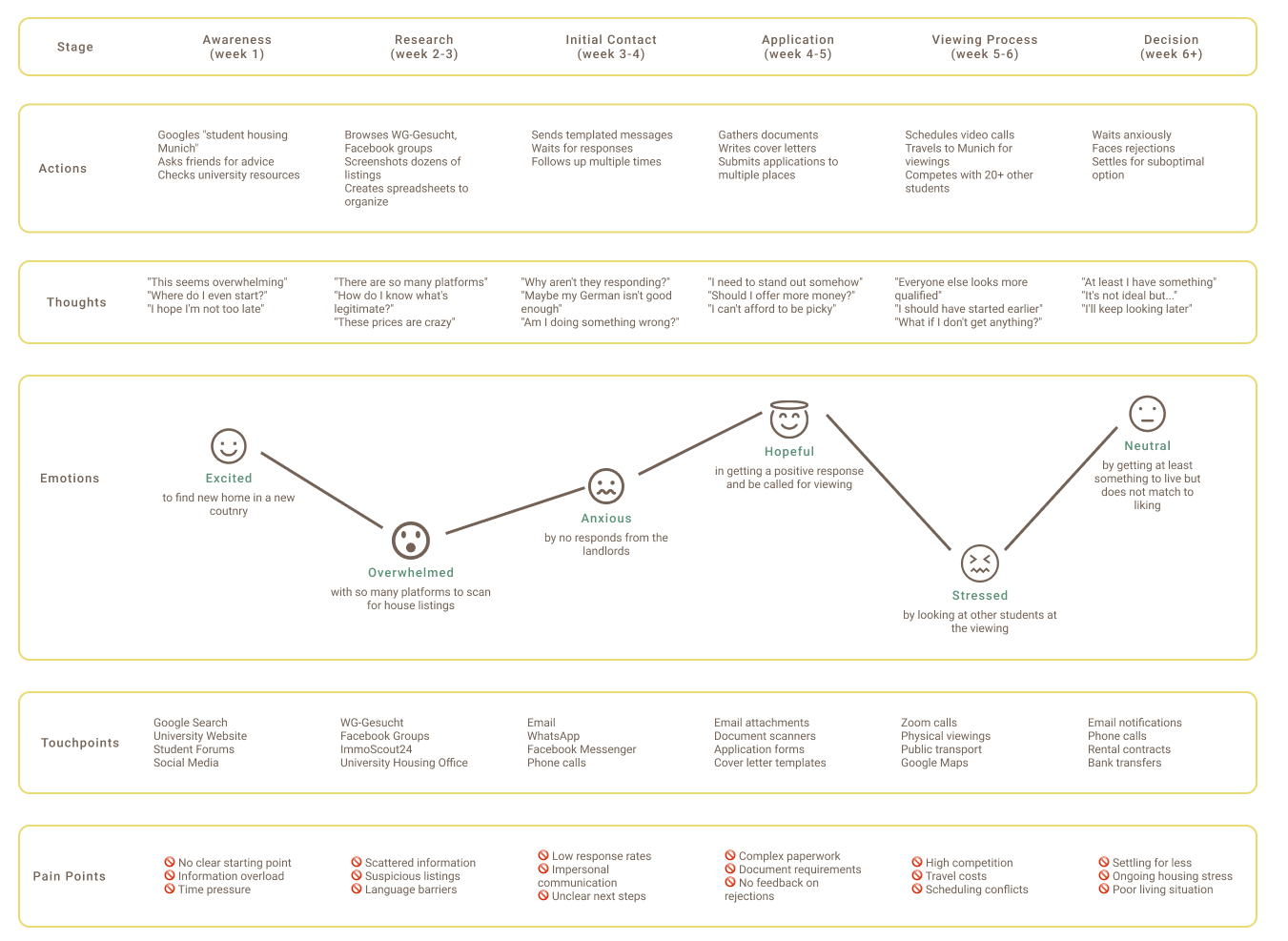
User Journey Mapping
Key Features & Design Rationale
Mobile-First / Desktop-First?
Before creating any screens, I addressed three strategic questions:
Decision: Mobile-first
Reasoning: 87% of students searched during gaps between classes using phones. They needed to respond to listings immediately—waiting to login on desktop meant losing opportunities.
What Features for MVP?
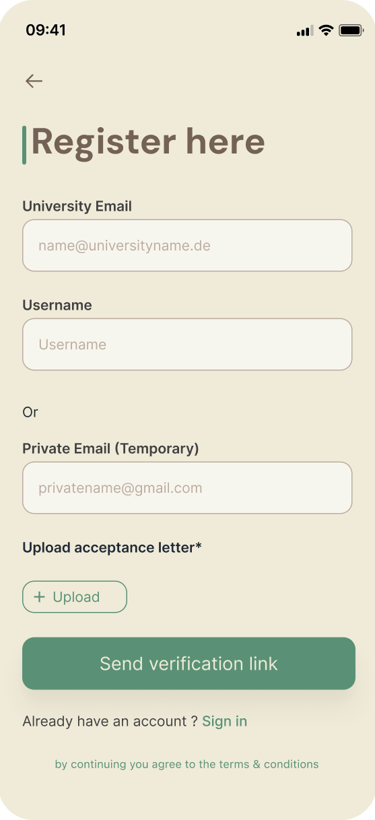
Decision: Core features only—verification system, search, filters, price transparency
Reasoning: With a 4-week timeline, I prioritized features directly addressing the top 3 pain points rather than building a comprehensive platform
How to Build Trust Immediately?
Decision: Verification & Transparency as the key feature, visible in all listings.
Reasoning: Research showed students suffered from hidden prices and scam encounters.
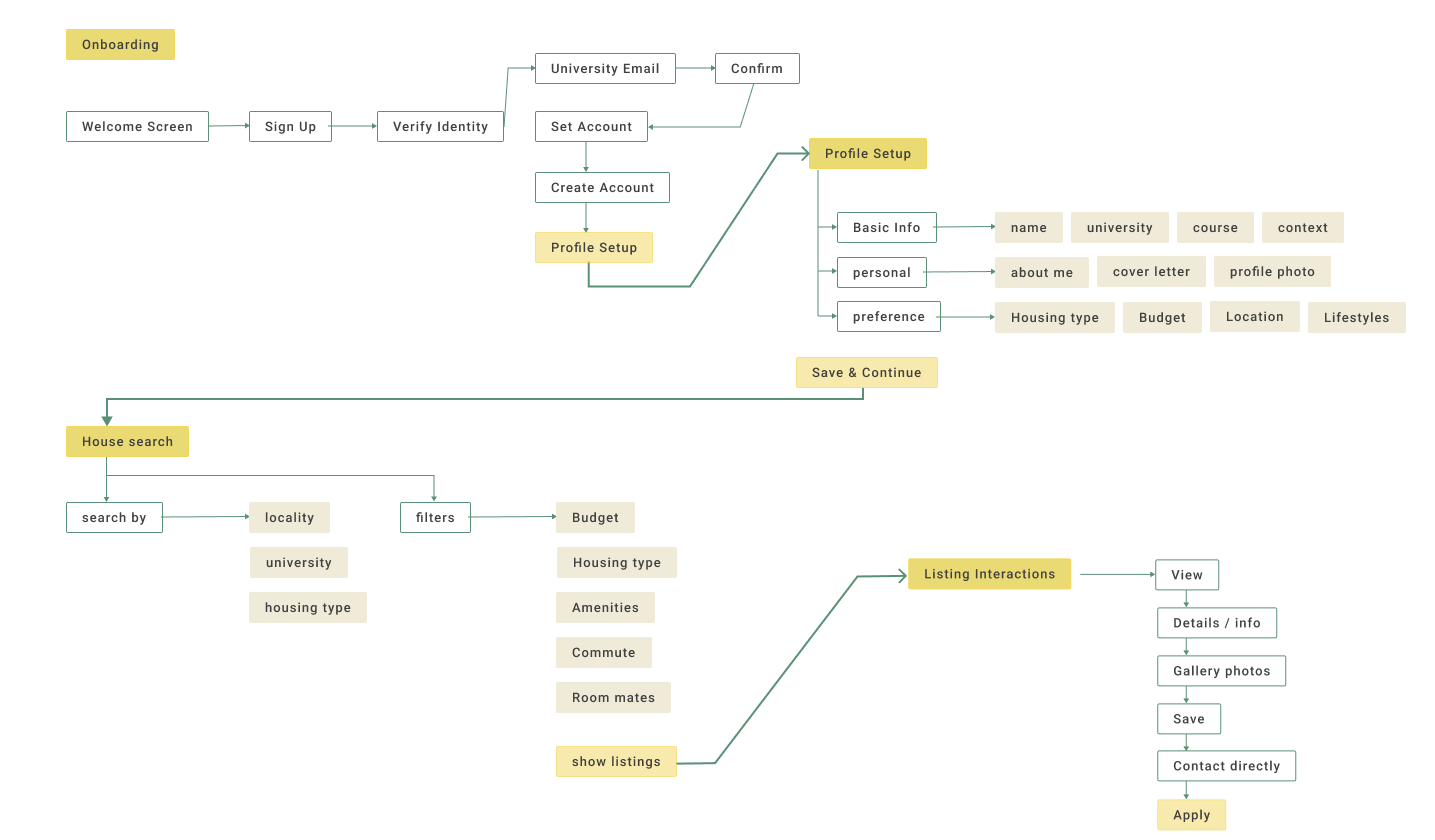
Site Map
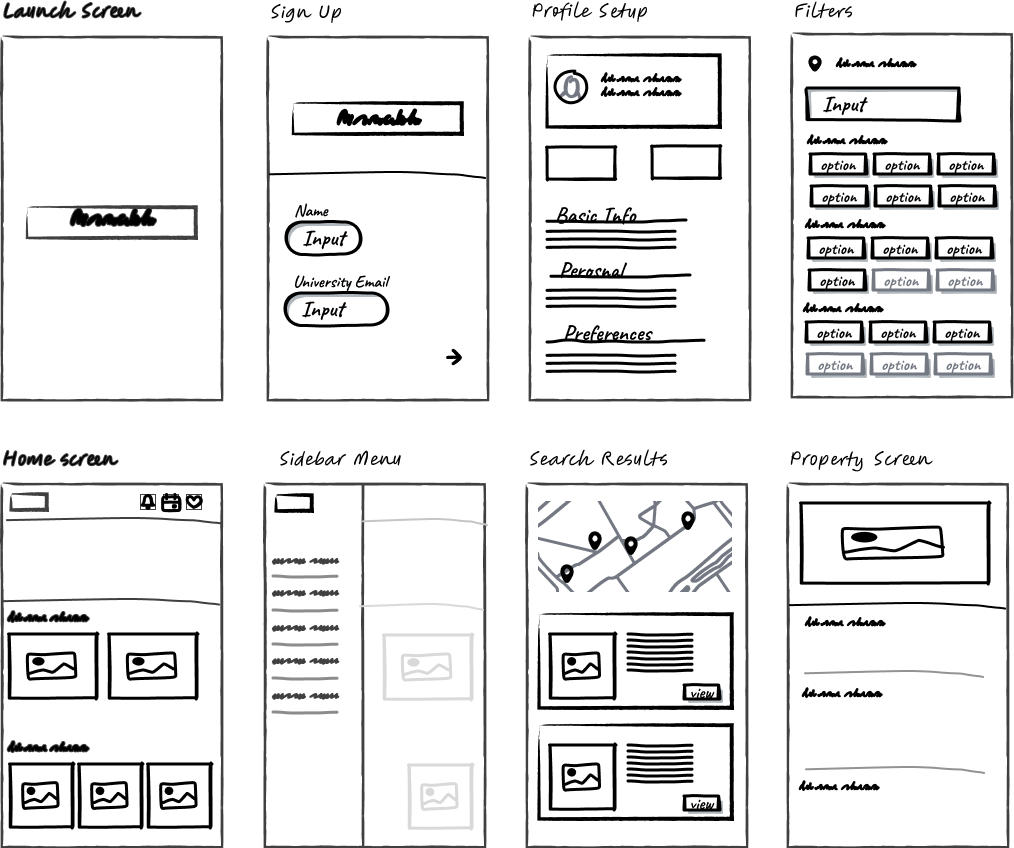
Wireframe
Hi-fi Prototyping